Key Takeaways
- The holidays don’t cause workplace violence, but staff exhaustion, family and patient strain, and staffing variability can make escalation harder to manage.
- Prevention starts early: recognize warning signs, staff shifts so nurses have capacity to intervene, and make sure no one handles threatening behavior alone.
- Easy reporting and visible leadership follow-through give nurse leaders real-time insight and show staff their safety matters.
Why Holiday Stress Is a Staff Safety Issue in Healthcare
The holidays are supposed to be the most wonderful time of the year. But inside healthcare organizations, it isn’t the presents getting wrapped. It’s staff getting wrapped up in stress, emotional vulnerability, and that can raise the risk of workplace violence.
While families gather, nurses and other frontline caregivers keep providing care around the clock, often missing traditions of their own. At the same time, patients and visitors arrive carrying the extra emotional weight of the holiday season. According to the American Psychological Association, 89% of people said they had concerns such as finances and familial conflict between November and January, and 41% said their stress levels increased at this time of year.
The holidays don’t cause workplace violence. But when these pressures collide in an already demanding clinical environment, the conditions for frustration and escalation deserve heightened attention.
Two Populations, One Stressful Environment
Healthcare workers aren’t immune to the emotional pressures of the people they care for. Holiday staffing challenges, heavier workloads, fatigue, and missed family traditions can drain the reserves caregivers rely on while providing care.
Patients and families bring their own emotions into the mix when they have to be in a healthcare setting unexpectedly. They may experience fear, grief, financial pressure, long waits, and disrupted holiday expectations. In pediatric settings, parental anxiety adds another layer. The care environment compounds it all, with staffing variability, delayed discharges, and limited behavioral health resources making escalation harder to manage.
Here are five ways to get ahead of it.
1. Recognize Early Warning Signs of Escalation
Violence rarely starts with violence. Early warnings that something bigger could be brewing, such as a raised voice, a changed tone, or a family member’s frustration, are opportunities to intervene before there’s an incident. Holiday stress can shorten the fuse, so reinforce behavioral warning signs, situational awareness, and de-escalation techniques early in the season.
The research backs this up. A 2025 analysis in JAMA Network Open of more than 15,000 patient safety event reports found that agitation and aggression were the leading precipitating factors in workplace violence events. If agitation is the signal, early recognition is the opportunity.
2. Staff Holiday Shifts With Safety in Mind
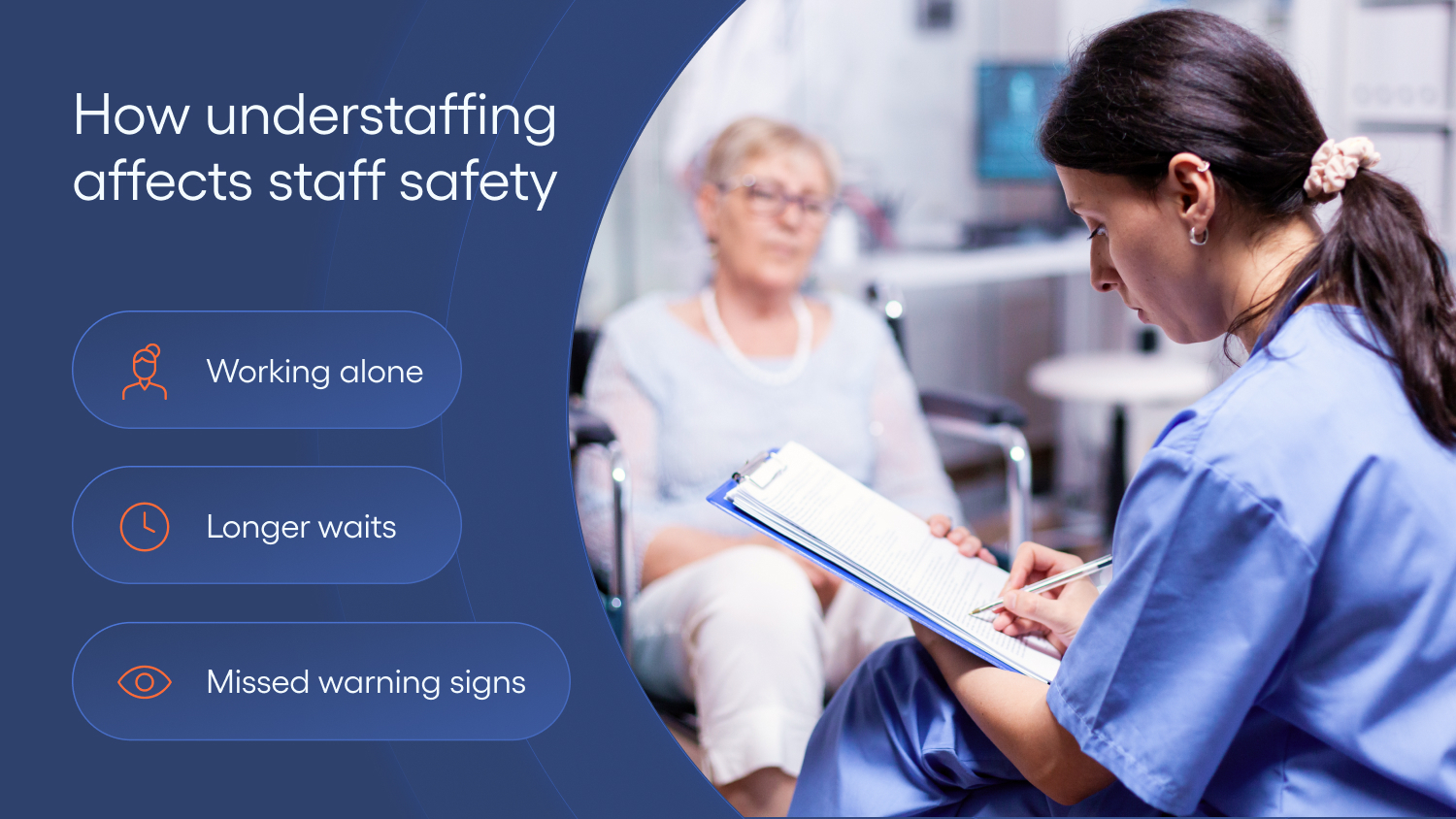
Staffing and safety are more connected than they look on a schedule. The Michigan Nurses Study found that understaffing on the previous shift was associated with a higher likelihood of nurses reporting workplace violence. A study in the Joint Commission Journal on Quality and Patient Safety found that patient assignments were significantly larger on shifts when an aggressive event occurred.
When you can’t add staff, protect the capacity to intervene. Make sure charge nurses know where help is coming from on high-acuity units, and don’t let the busiest shifts become the ones where nobody has time to notice a change in a patient’s or visitor’s behavior.
3. Make Sure No One Handles Threatening Behavior Alone
Staff should never feel they have to manage threatening behavior on their own. Proactive rounding, quick check-ins after a tense interaction, and accessible ways to call for help all send the same message: you’re not by yourself.
Consistent use of wearable safety technology matters here, and so does the culture around it. R.L. Hughes, director of safety, security, and sustainability at Beebe Healthcare, encourages staff to press their Canopy Buttons early and often, so help can get to them before an incident even occurs. Canopy’s Proximate Notifications alert nearby colleagues along with security, so the people closest to the situation can check in first.
4. Make Reporting Easy, Even on a Busy Shift
On a slammed holiday shift, it’s easy for a verbal threat to become “just part of the job” and never get written down. The Michigan Nurses Study found that nearly half of nurses experienced some form of workplace violence, yet non-reporting to employers exceeded 40% in both survey years.
Underreporting can happen for a few reasons, so it’s important to remove the barriers. Make reporting easy for staff and be sure verbal threats count as a reportable offense. Staff also need to feel supported when they report an incident. If they feel like they’ll be viewed as overreacting or that nothing will come from reporting, they’re less likely to speak up. Follow up visibly so people see that speaking up leads somewhere.
Accurate and thorough reporting gives a clearer picture of where verbal and physical aggression are more likely to occur, which also makes it easier to plan for and prevent any workplace violence.
5. Make Prevention Visible to Leadership
The holiday season is a good time for workplace violence committees and nurse leaders to watch incidents, near misses, staff safety perceptions, and emerging unit-level risks in real time instead of in a January report.
UCLA’s Resnick Neuropsychiatric Hospital offers a model. Every morning at 9:30, an interdisciplinary team reviews the previous 24 hours, including assaults, patient boarding, facilities issues, and staff well-being. The meeting also checks whether a leader reached out to any staff member who was assaulted. Visible follow-through like this is also a retention strategy. In the Michigan Nurses Study, nurses who experienced workplace abuse or violence had 39% higher odds of planning to leave.
A Holiday Message for Nurse Leaders
The holiday season is a chance to reinforce that workforce safety isn’t only a security responsibility. It’s a clinical leadership responsibility.
The most meaningful gift an organization can give its healthcare workers is the confidence that their safety matters, their concerns will be heard, and help will be there when they need it. The holidays may increase the emotional demands of caring, but they should never increase our tolerance for violence.
Learn How One Incident Ripples Across a Unit
Violence doesn’t stop with the person it happens to. Download our new ebook, Safety Runs Deeper, to see how a single incident affects staff, units, and patients.