Key Takeaways
- Workplace violence incident reporting covers physical assaults, threats, verbal abuse, and near misses.
- Joint Commission standards require accredited hospitals to have a process to report incidents and analyze trends.
- Verbal abuse and near misses often go unreported, even though close calls show where risk is rising.
- Unfiled reports often trace back to friction in the system, such as limited time, unclear expectations, and no feedback.
- Hospitals that use report data to guide action and close the loop with staff can intervene earlier.
Workplace violence incident reporting is how hospital staff document acts or threats of violence at work so leaders can respond, investigate, and look for patterns. A report can cover a physical assault, a threat, verbal abuse, or a near miss, such as an attempted assault where no one was harmed.
Hospitals already have a way to file a report. The harder part is ensuring every incident is actually reported. Verbal abuse and close calls often never reach the system. A workplace violence report is only as valuable as what happens next. Hospitals that make reporting simple, capture the full picture, and close the loop with staff can see where violence starts and step in before it escalates.
This guide covers internal and external reporting, including Joint Commission requirements, what to report and what to include in a report, why reports go unfiled, and how hospitals turn reports into action.
Internal vs. External Workplace Violence Reporting
Hospital workplace violence reporting runs on two tracks. Internal reporting stays within the hospital's own systems. External reporting goes to accreditors, regulators, or law enforcement when rules require it.
Internal Reporting
Most incidents start with an internal report. A nurse, security officer, or other staff member files it in the hospital's incident reporting system, sometimes with a charge nurse's help. Security may add its own report. The workplace violence committee or safety team then reviews the details.
Internal reports are the hospital's own record of where and how violence happens. Leaders use them to plan staffing, training, and security coverage.
External Reporting
External requirements vary by state and by incident. Federal OSHA doesn't have a workplace violence standard for healthcare. Its guidelines for healthcare and social service workers are advisory. Injuries from assaults still go on the OSHA 300 log when they meet OSHA's recording criteria. The same guidelines recommend that employers ask workers to report all assaults and threats.
Some states go further. California hospitals must report the most serious violent incidents to Cal/OSHA within 24 hours. These include incidents that cause certain serious injuries, involve a firearm or other dangerous weapon, or present an urgent threat to staff. Other reportable incidents are due within 72 hours, according to Cal/OSHA's hospital workplace violence FAQ. California hospitals also keep a violent incident log. Rules differ from state to state, so security and risk teams should check the requirements where each facility operates.
What Does the Joint Commission Require for Workplace Violence Reporting?
The Joint Commission's workplace violence prevention standards took effect for accredited hospitals on January 1, 2022. They require a workplace violence prevention program led by a designated individual and developed by a multidisciplinary team. That program must include a process to report incidents so the hospital can analyze incidents and trends. It also has to report incidents to the governing body and provide follow-up and support for victims and witnesses.
Other requirements also touch reporting.
- Monitoring and investigation: a process to continually monitor, internally report, and investigate safety and security incidents, including workplace violence.
- Annual worksite analysis: a yearly review that includes the hospital's workplace violence incidents, followed by action on the risks it finds.
- Training: education at hire, every year, and whenever the program changes, covering what counts as workplace violence and how to report it.
In January 2026, these requirements moved into the Joint Commission's National Performance Goals for hospitals. The Joint Commission describes the move as structural, with no new requirements. Canopy's look at what the Joint Commission's 2026 goals mean for hospital safety covers the change in more detail.
What Workplace Violence Incidents Should Hospital Staff Report?
Staff should report any act or threat of violence at work, whether or not anyone was hurt. The Joint Commission's definition of workplace violence is broad. It includes verbal, nonverbal, written, or physical aggression, along with threatening, intimidating, harassing, or humiliating words or actions. It also covers bullying, sexual harassment, and physical assaults involving staff, licensed practitioners, patients, or visitors.
A complete reporting program captures:
- Physical assaults: hitting, kicking, biting, scratching, or shoving by a patient, visitor, or anyone else on site.
- Threats: spoken, written, or nonverbal threats of harm, including gestures.
- Verbal abuse: yelling, insults, slurs, and intimidating or humiliating language.
- Sexual harassment: unwanted comments, gestures, or touching.
- Near misses: attempted assaults where no one was harmed, such as a thrown object that misses.
- Weapons: any incident involving a firearm, knife, or other object used as a weapon.
8 Things to Include in a Workplace Violence Incident Report
A useful report captures enough detail for leaders to understand what happened and spot patterns over time. OSHA’s workplace violence guidance for healthcare is a helpful starting point. Most reports should include:
- Date and time: when the incident happened, including the day of the week and shift.
- Location: the specific unit, room, hallway, or area, such as a stairwell or parking structure.
- People involved: who was targeted and who the aggressor was, such as a patient, visitor, or coworker.
- Type of incident: physical assault, threat, verbal abuse, sexual harassment, near miss, or an incident involving a weapon.
- What happened: a short description of the incident and what led up to it, such as long wait times, intoxication, or a known history of violence.
- Injuries: whether anyone was hurt and how seriously.
- Witnesses: who else was present or saw what happened.
- Actions taken: how the situation was resolved, who responded, whether security or police were called, and when a supervisor was notified.
The lead-up to an incident is often the most useful detail for prevention. It shows leaders where conditions on a unit can change before the next incident.
The Incidents That Often Go Unreported
Verbal abuse and near misses slip through because no one was physically hurt. They're also some of the most common incidents. In a 2024 survey of Texas nurses, 72.7% had experienced verbal abuse in the past year. By comparison, 34.7% had been physically assaulted.
The Joint Commission recommends that hospitals capture, track, and trend all reports of workplace violence, including verbal abuse and attempted assaults when no harm occurred. Escalation builds in stages. The patient who makes threats on one shift may be the one who swings at a nurse on the next. A near miss shows where a situation nearly turned and what helped calm it. Canopy's look at the anatomy of a near miss in healthcare explains why close calls are some of the clearest early warnings a unit gets.
Why Don't Nurses Report Workplace Violence?
Underreporting is an industry-wide challenge. It reflects how reporting systems are built more than the commitment of any hospital or its staff. In the Texas survey, 53.7% of nurses reported their most recent workplace violence incident to their organization's reporting system. That leaves close to half of those incidents going unreported, leaving leaders without valuable data.
The most common reason nurses gave for not reporting was that they didn't expect anything to change. More than a third said violence had become an accepted part of the job. Most reasons fall into a few groups.
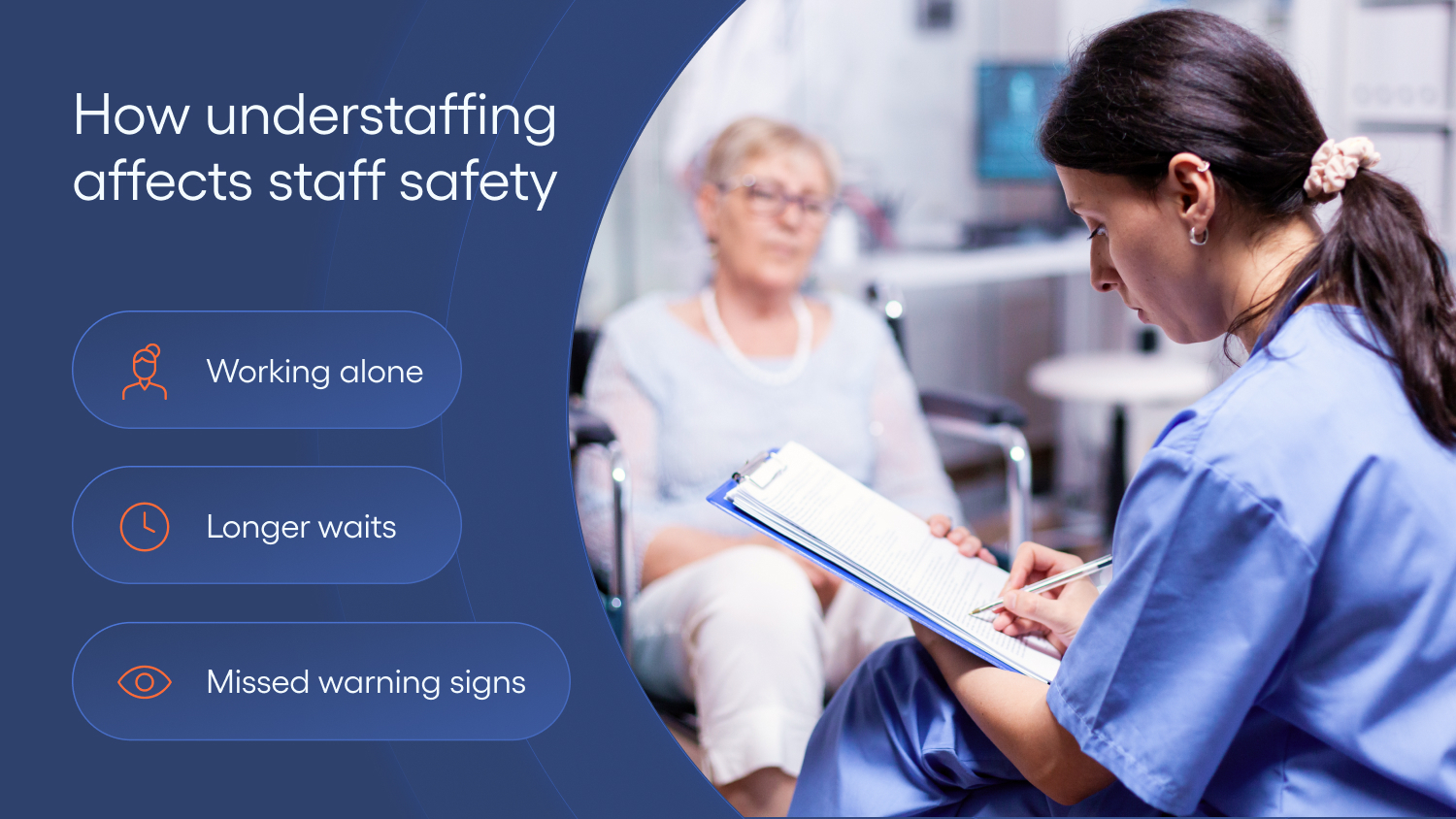
- Time: reporting competes with patient care. A nurse who just calmed an escalating patient still has other patients waiting. The report gets pushed to the end of the shift, or it doesn't get filed at all.
- Unclear expectations: staff may not know whether verbal abuse or a near miss counts, or where to file it.
- No feedback: when past reports led to no visible response, there's little reason to file the next one.
- Fear of how it looks: some staff worry they'll be seen as dramatic or as a problem. Others worry about blame or retaliation.
- Lack of support: whether it's perceived or real, staff who don't feel supported after an incident are less likely to report the next one.
Each of these barriers can be overcome. Simpler forms, clear expectations, and visible follow-up all lower the cost of filing a report. Canopy explores what happens when healthcare staff don't report and how silence creates blind spots in a hospital's safety data.
How Hospitals Use Workplace Violence Reports to Prevent Future Incidents
A report that sits in a database changes nothing for the nurse who filed it. Reports that feed regular review show leaders which units, times, and situations carry the most risk. Canopy's Jeanne Venella, DNP, describes this as a shift from counting reports to using the data to reduce harm. Four practices help hospitals make that shift.
1. Make Reporting Simple
A short form that works on a phone or shared workstation removes much of the friction. Clear categories for verbal abuse, threats, and near misses tell staff what counts. Training should cover how to report. The Joint Commission requires yearly training. Letting a charge nurse or security officer start a report on a staff member's behalf can also help after a hard incident, particularly if a nurse was injured during the incident.
2. Track and Trend Every Report
A single report describes one incident. Trends show patterns. Reviewing reports by unit, time of day, location, and incident type shows where violence clusters. A behavioral health unit might see verbal abuse rise during evening visiting hours. A parking structure might draw repeated threats around shift change. The Joint Commission's required annual worksite analysis is just one formal checkpoint. Monthly reviews by the workplace violence committee help leaders act sooner.
3. Review Contributing Factors
Strong reviews look at the conditions around an incident as well as the incident itself. Staffing levels, wait times, unit layout, patient history, and handoffs all play a part. Research covered in Canopy's post on why safe staffing is a workplace violence prevention strategy links understaffed shifts with higher reports of violence. A three-minute debrief after a near miss can capture what staff noticed before the situation turned.
Reviews should also cover the people involved. The Joint Commission requires follow-up and support for victims and witnesses, including trauma and psychological counseling when needed. The effects don’t end when the shift does. In CDC research, 84.9% of health workers who were harassed at work reported symptoms of anxiety, compared with 52.8% of those who weren’t. A study of emergency department nurses found that 94% experienced at least one symptom of post-traumatic stress disorder (PTSD) after a violent event, and about 17% had scores consistent with probable PTSD.
Explore how violence echoes long after an incident ends and why support matters for staff who stay.
4. Close the Loop With Staff
Feedback answers the most common reason staff give for not reporting. When staff see what happened after a report, they have a reason to file the next one. Leaders should share what changed as a result. That might be a new patient flag in the electronic health record (EHR), an added security round, or extra coverage at a high-risk time of day. Unit huddles and short monthly summaries make that feedback visible without naming the person who reported.
A culture that encourages reporting and acts on it also supports retention. In the 2026 Canopy Healthcare Safety Report, 51% of healthcare workers said safety concerns directly influence turnover.
How Technology Makes Workplace Violence Reporting Faster and More Complete
Simpler digital forms help staff file faster, but they still depend on someone stopping to write a report. Duress alert data fills the gap when no one does.
How Duress Alert Data Supports Reporting
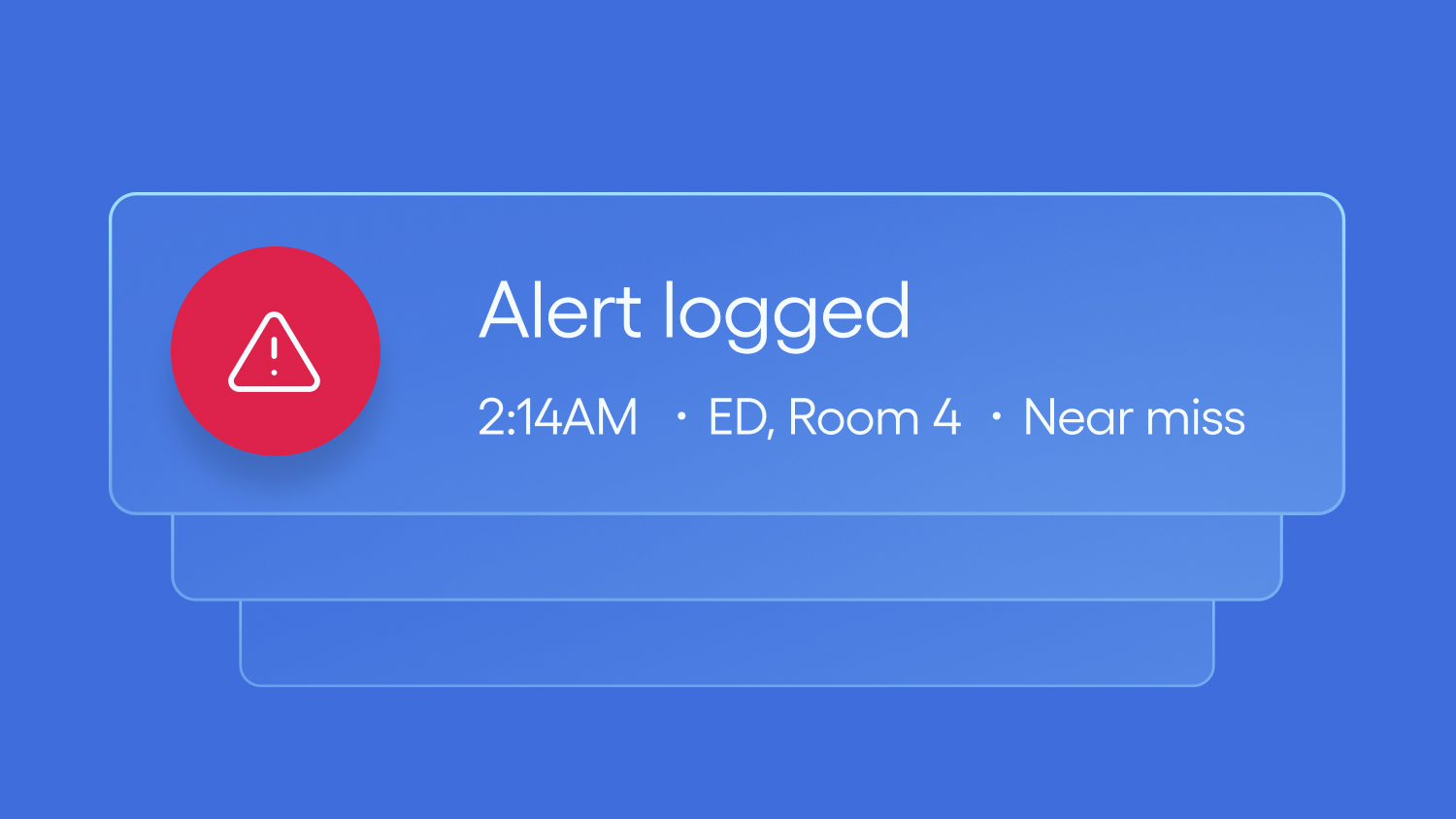
When a nurse double-presses a wearable duress button, the system records exactly when and where help was called. That record exists whether or not a formal report follows.
Consider a patient who grows agitated during a medication pass. The nurse double-presses, a colleague from two rooms down arrives, and the patient settles. No one was hurt, so no one files a report. The alert record still shows when and where it happened. Over time, those records show which units, rooms, and hours see the most activations, including close calls that never reach the reporting system.
Alert data and staff reports work best together. An activation shows where and when. The report explains what happened and why. Together, they give security and nursing leaders a more complete view of each unit's risk.
Canopy Protect is a workplace violence prevention platform built to reach a caregiver in the seconds before an incident becomes a crisis. A discreet double-press on the Canopy Button summons the nearest colleagues and security to the caregiver's location. The nurse doesn't have to turn away from the patient or cross the room to a wall button, and the patient doesn't see the call for help. Often, the first help comes from a nearby colleague.
Every alert is logged with its time and location. Security leaders can use that incident data and heat maps to find high-risk areas and support staffing decisions. When reports and alert data point to the same hot spots, teams can intervene earlier, when intervention is simplest and safest.
Canopy Protect is one layer of a prevention program. It works alongside training, cameras, EHR flags, threat assessment teams, and the workplace violence committee, covering the moment a caregiver needs help. Canopy's guide to workplace violence in healthcare covers how these layers fit together.
To see how alert data can support your hospital's workplace violence reporting, schedule a conversation with Canopy's team, including clinical strategy leaders who are nurses by background.
FAQ
What is workplace violence incident reporting in hospitals?
Workplace violence incident reporting is how hospital staff document acts or threats of violence at work. Reports cover physical assaults, threats, verbal abuse, sexual harassment, and near misses. Leaders use them to respond, investigate, and spot trends.
Should verbal abuse be reported as workplace violence?
Yes. The Joint Commission's definition of workplace violence includes verbal aggression and threatening or humiliating words. Its guidance recommends that hospitals track all reports, including verbal abuse. Verbal abuse is also one of the most common forms of workplace violence nurses experience.
Do hospitals have to report workplace violence to OSHA?
It depends on the incident and the state. Assault injuries go on the OSHA 300 log when they meet OSHA's recording criteria. Some states set their own rules. California, for example, requires hospitals to report violent incidents to Cal/OSHA within 24 or 72 hours, depending on severity.
Why don’t nurses report workplace violence?
Nurses often don’t report because workplace violence reporting in healthcare can come with multiple barriers. Staff may lack time, be unsure what’s worth reporting, or see no change after past reports. Some worry about being seen as dramatic or problematic, while others don’t believe they’ll be supported by leadership. Simple reporting and visible follow-up help address these barriers.
How does duress alert data support workplace violence reporting?
Duress alert data records when and where staff called for help, whether or not a written report follows. Over time, it shows which units and hours see the most activations. Paired with staff reports, it helps leaders see where incidents begin to build.