Key Takeaways
- Understaffing in nursing reflects industry-wide challenges, including workforce shortages, burnout, an aging workforce, and limited nursing school capacity.
- When each nurse covers more patients, longer waits have the potential to turn patient frustration into agitation and aggression.
- Short-staffed shifts leave nurses less time to catch early warning signs and fewer colleagues nearby when a situation turns.
- Layered prevention, de-escalation training, wearable duress buttons, and a strong reporting culture help protect nurses.
- Reports that lead to visible action support retention and show leaders where violence can be prevented.
Understaffing in nursing means a unit has fewer nurses than it needs to care for its patients safely. It shows up as heavier patient assignments, missed breaks, extra shifts, and less time at each bedside. Most nurse leaders know what it's like to build a schedule around gaps they can't fill.
The causes reach well beyond any single hospital. A national shortage, burnout, retirements, and limited room in nursing programs all affect who is available to staff a unit on a given night. Leaders can't solve those challenges alone. What they can do is make sure help is always close by, even on the hardest shifts.
This guide covers what's behind nurse understaffing, how it affects nurses and patients, why safety becomes a bigger priority when units are short-staffed, and practical ways to protect nurses when units run thin.
What Does Understaffing in Nursing Look Like Today?
Short staffing in nursing often looks like a nurse covering one or two more patients than usual, or a charge nurse taking a full assignment on top of running the floor. A float nurse may be new to the unit's routines. Breaks get skipped. A shift runs long because the handoff can't happen on time.
What's Behind Understaffing in Nursing?
No single cause explains nurse understaffing. Most of the drivers sit outside any one hospital's control. Four industry-wide realities shape staffing today.
- Workforce Shortages
The Health Resources and Services Administration (HRSA) projects an 8% shortage of registered nurses in 2028. The gap is much wider outside cities, at a projected 24% in nonmetro areas compared with 5% in metro areas. For many hospitals, that means hiring into a tight market for years to come.
- Burnout and Turnover
More than 138,000 nurses have left the workforce since 2022, according to the National Council of State Boards of Nursing (NCSBN). Stress, burnout, and retirement were the main reasons for their departure. In the same study, 39.9% of RNs said they plan to leave the workforce or retire within five years.
Recovery from burnout takes time and support from leaders. Canopy's guide on how to help healthcare workers recover from burnout covers what leaders can do.
- An Aging Workforce
The median age of registered nurses rose from 46 in 2022 to 50 in 2024, according to the same NCSBN study. As experienced nurses retire, units lose years of clinical judgment as well as the mentors who help new nurses settle in.
- Limited Nursing School Capacity
Interest in nursing remains strong, but schools are limited by their capacity. Nursing schools didn't accept 80,162 qualified applications in 2024, according to the American Association of Colleges of Nursing (AACN). AACN points to shortages of clinical placement sites, faculty, preceptors, and classroom space, along with budget cuts.
Effects of Understaffing in Nursing on Nurses and Patients
When a unit runs short, nurses carry more patients, more tasks, and more decisions per hour. That load adds up physically and emotionally.
A landmark study in JAMA found that each additional patient per nurse was associated with 23% higher odds of nurse burnout and 15% higher odds of job dissatisfaction. Safety plays a part as well. In Canopy's 2026 report, 64% of healthcare workers said not feeling safe at work contributed to their burnout. Canopy's look at the physical toll of workplace violence explains how stress and fear wear on the body over time.
Patients feel the effects too. The same JAMA study looked at surgical patients in Pennsylvania hospitals. Each additional patient per nurse was associated with a 7% increase in the odds of death within 30 days of admission. On a busy unit, patients may also wait longer for medication, help to the bathroom, or answers about their care.
How Does Nurse Understaffing Raise the Risk of Workplace Violence?
Healthcare already carries more risk than most fields. Healthcare and social assistance accounted for 72.8% of private-industry workplace violence cases in 2021 and 2022, according to the Bureau of Labor Statistics. Staffing ratios can stretch for many reasons, from open positions to a hard week on the unit. As each nurse covers more patients, the conditions that lead to workplace violence become more common.
That's why safe staffing is also a workplace violence prevention strategy. Research from the Michigan Nurses Study links understaffed shifts with higher reports of workplace violence. Three changes help explain that link.
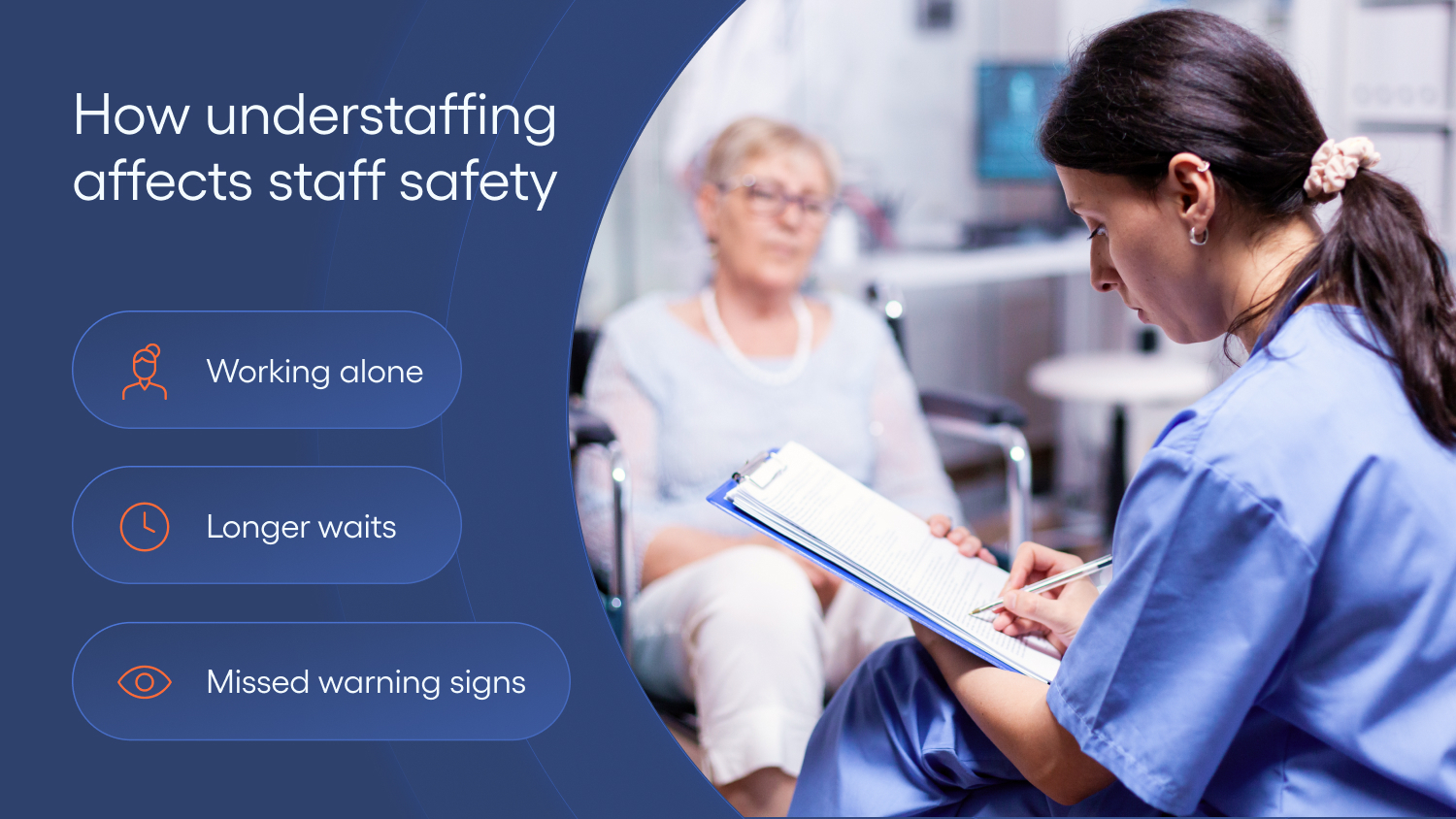
Longer Waits Can Raise Frustration
Patients and families get less one-on-one time when a unit is stretched. Call lights take longer to answer. Questions wait until a nurse is free. People who are already scared, in pain, or confused can grow frustrated, and frustration can turn into agitation. A 2025 study in JAMA Network Open, covered in Canopy's safe staffing post, found agitation and aggression were leading factors behind reported workplace violence incidents.
Less Time to Catch Early Warning Signs
Most escalations build over minutes. A patient starts pacing, raises their voice, or stops responding to redirection. Nurses are skilled at reading those cues, but reading them takes time and attention. When a nurse is moving quickly between six rooms, early signs are easier to miss. Canopy's guide on how to recognize the warning signs of behavioral escalations covers the verbal, physical, and behavioral cues to watch for.
More Time Working Alone
Thinner staffing means fewer colleagues within earshot. Nights, holidays, and shift changes are often the hardest stretches. A nurse may be alone in a room at 2 a.m. and feel isolated on a quiet floor. At 11 p.m. shift change, a nurse might walk to a far parking lot with their phone in a bag.
Nurses often know a situation is going wrong before anyone else does. On a thin unit, acting on that instinct is harder. Calling for help can mean stepping away from the patient, reaching for a phone, or raising a voice in a room that's already tense. The moment before an incident becomes a crisis is often when a nurse needs help most. It's also when help is hardest to reach.
Ways to Protect Nurses on Every Shift
Hospitals can't always control how many nurses are available on a given shift. They can make sure every nurse working that shift has help close by. These four practices work best together.
1. Layer Your Prevention Program
No single tool keeps a unit safe. Strong programs combine entry screening, cameras, flags in the electronic health record (EHR) for patients with a history of violence, threat assessment teams, and an active workplace violence committee. The Joint Commission has required accredited hospitals to run a workplace violence prevention program since 2022. That program has to include a process for reporting incidents and analyzing trends. Each layer covers gaps the others can't, which matters most when staffing is tight.
2. Train Every Shift on De-escalation
De-escalation training gives nurses shared language and steps for calming a tense situation. It works best when it reaches everyone who works the unit, including night staff, float pool nurses, and travel nurses. Regular drills help teams practice who responds, who calls for more help, and who stays with other patients.
3. Make Sure Help Is Always Close By
When a unit runs thin, the fastest help is often the colleague two rooms down. Wearable duress buttons let a nurse call for that help from wherever they are, without leaving the patient or reaching for a phone. Fixed wall buttons and pull cords only work if a nurse can get to them. They also don't cover stairwells, hallways, or parking structures.
Systems that alert the nearest colleagues first, along with security, close that gap. Trusted colleagues can arrive within 30 to 60 seconds, compared with 4 to 6 minutes on average for a conventional security response, according to Canopy's analysis of why proximate notifications matter. Early help can calm a situation before it becomes a crisis.
4. Build a Reporting Culture That Leads to Action
Many nurses don't report workplace violence. A systematic review in BMC Nursing found that fear of consequences, a lack of visible change after reporting, and unsupportive reporting cultures were among the main reasons. Some nurses also worry they'll be seen as overreacting.
Reporting gets easier when nurses see something happen as a result. Leaders can close the loop by sharing what changed after a report, whether that's a new staffing pattern, a patient flag, or a security round in a problem area.
Near-misses deserve the same attention. When a nurse reports concerning behavior before it escalates, leaders learn where violence can be prevented. Canopy explains what happens when healthcare staff don't report and how silence hides the full picture.
Acting on reports is one of the clearest ways to show a commitment to safety, and that commitment helps keep nurses on staff. In Canopy's 2026 report, 51% of healthcare workers said safety concerns directly influence turnover. Most (85%) said a visible commitment to safety is extremely critical when choosing a new employer.
How Does Canopy Protect Help Keep Short-Staffed Units Safe?
Canopy Protect is a workplace violence prevention platform built to bring help to a caregiver in the seconds before an incident becomes a crisis. Nurses wear a discreet Canopy Button. A double-press summons the nearest colleagues and security to the nurse's location. The nurse can continue to deliver care without signaling to the patient that help is on the way.
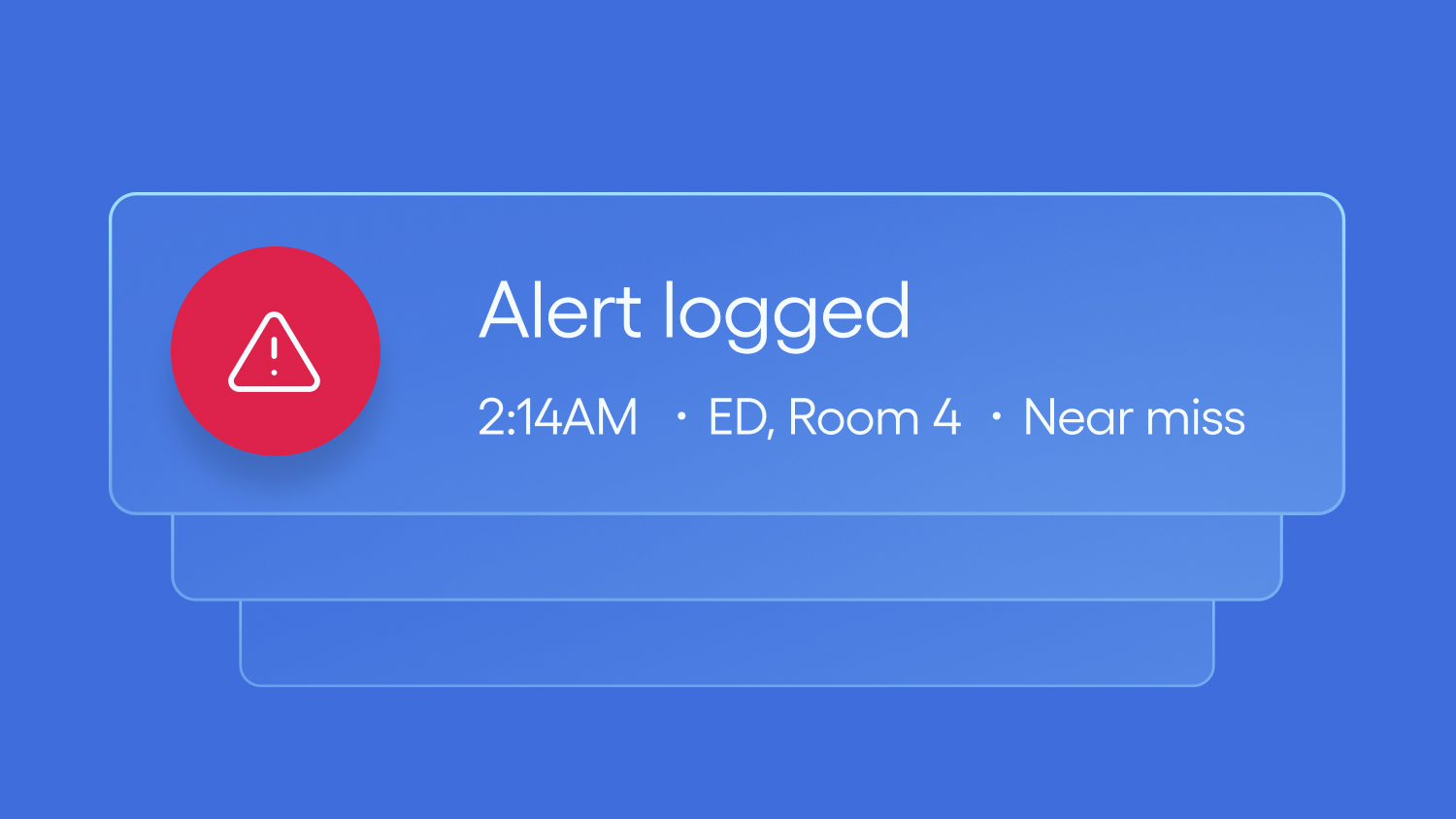
Canopy Protect is one layer of a full prevention program. It connects training, cameras, entry screening, EHR flags, and the workplace violence committee to the moment a nurse needs help. Every alert is logged with a time and place, which gives leaders the trend data their reporting programs depend on.
Underneath, Canopy Protect runs on the Canopy LocationID Network, a safety-grade real-time location system (RTLS). Safety-grade means it's built to find a person in seconds, everywhere care happens, from patient rooms and stairwells to parking structures and outbuildings.
Canopy works with nursing leaders to build a culture of safety their teams can feel on every shift. To see how Canopy Protect supports nurses on the hardest shifts, schedule a conversation with Canopy's team, including clinical strategy leaders with a background in nursing.
FAQ
What are the effects of understaffing in nursing?
Understaffing in nursing raises nurse workloads, burnout, and job dissatisfaction. It's also linked to worse patient outcomes, including higher 30-day mortality after surgery. On the unit, it means longer waits for patients, less time at each bedside, and fewer colleagues nearby when a situation escalates.
Does nurse understaffing increase workplace violence?
Research links the two. The Michigan Nurses Study found higher reports of workplace violence on understaffed shifts. Longer waits can raise patient agitation, while busy nurses have less time to catch warning signs.
How can hospitals keep nurses safe when units are short-staffed?
Hospitals can layer prevention tools, train every shift on de-escalation, and give nurses wearable duress buttons that bring the nearest colleagues quickly. A reporting culture that acts on incidents and near-misses helps leaders find where violence can be prevented.
Why is staff safety a bigger concern as nurse staffing ratios change?
When each nurse covers more patients, patients wait longer, and nurses have less time to notice early signs of escalation. Nurses also spend more time working alone, especially on nights, holidays, and shift changes. Those conditions make fast access to help more important.
What causes understaffing in nursing?
Understaffing in nursing has several industry-wide causes. They include a national nursing shortage, burnout and turnover, an aging workforce, and limited nursing school capacity. Most of these causes sit outside any single hospital's control.