You know the feeling. A patient's tone shifts. A visitor's body language tightens. Nothing has happened yet, but something is about to.
Healthcare workers recognize this moment. Call it the simmer: that uncomfortable instant before you've reached for the phone, before anything has technically gone wrong, but when every instinct is telling you to pay attention. It's fleeting. It's easy to second-guess. And it's the most important moment in the entire safety timeline.
What happens in the simmer determines whether a situation becomes a near-miss or an incident.
The traditional safety model wasn't built for the simmer. It was built for when an incident is already out of hand. But Canopy's Proximate Notifications are different. They're designed for exactly that moment, giving you a way to quietly signal a colleague before things escalate, while giving that colleague a way to appear in your doorway and ask, "Everything okay in here?"
That question, asked at the right moment, changes everything.
The Problem with Traditional Response Models
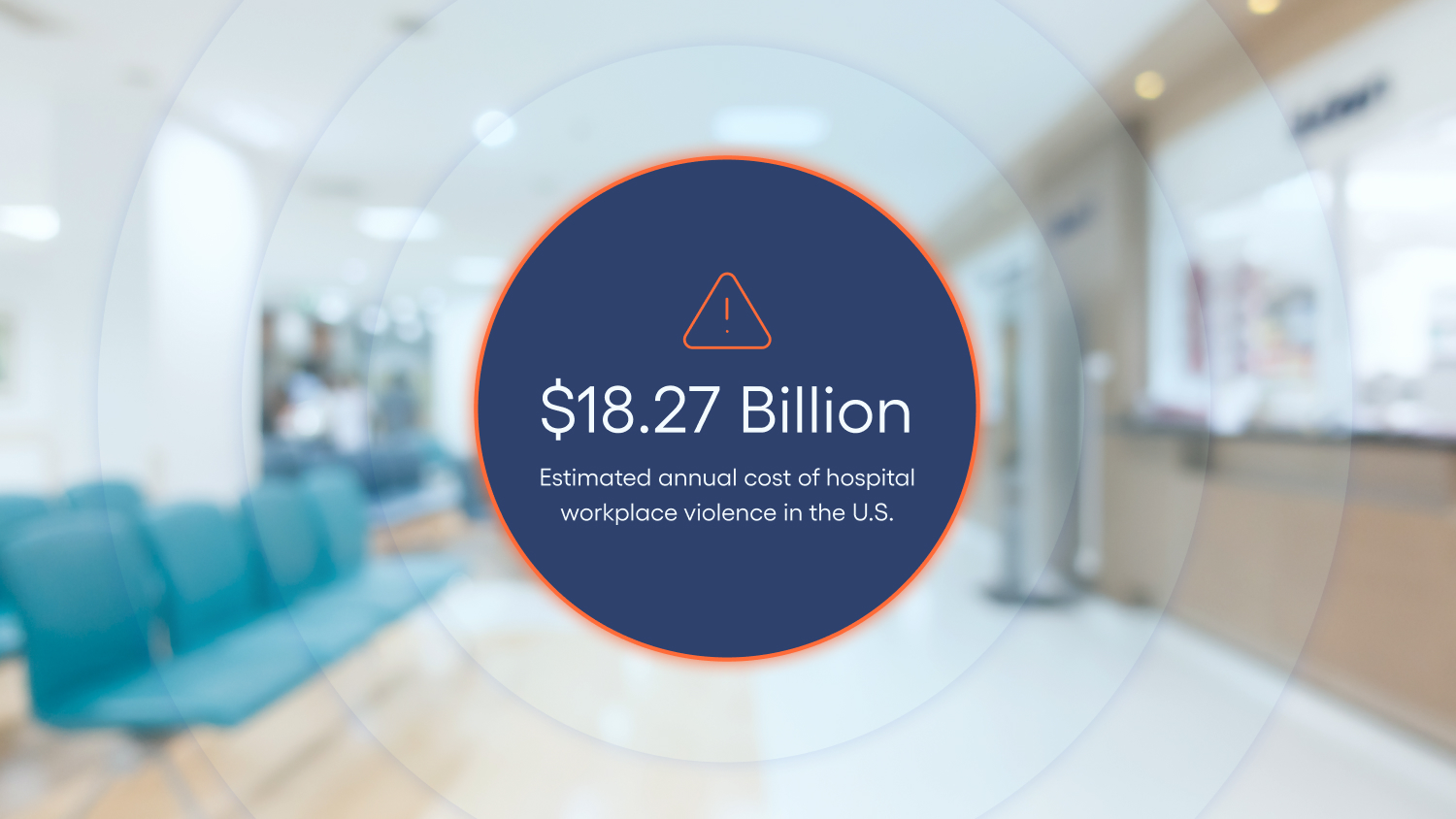
Healthcare workers face a disproportionate burden of workplace violence. According to the Bureau of Labor Statistics' most recent data (2021–2022), healthcare and social assistance workers experience workplace violence at a rate nearly five times the private industry average, accounting for nearly 73% of all nonfatal workplace violence injuries across all industries. While emergency departments, psychiatric units, and medical-surgical floors see the highest rates, no department is immune.
When an incident occurs, the conventional response model looks like this:
- Staff member activates a duress alarm or calls for help
- Security dispatch receives the alert
- Security personnel travel from their station
- Security arrives and assesses the situation
- Additional resources are called if needed
Total elapsed time: 4–6 minutes on average.
By the time security arrives, the simmer has already boiled over. During those critical minutes, a healthcare worker faces the situation alone, which is a risk to themselves, to the patient, and to everyone nearby.
Safety Is a Timeline, And the Window Opens Early
Workplace violence doesn't start with violence. It unfolds in predictable stages:
- The Simmer — Early warning behaviors. Discomfort. Tension. The moment something feels off.
- The Spike — Active escalation. The window for easy de-escalation is closing fast.
- The Crisis — The incident occurs.
- The Aftermath — Recovery, reporting, and the lasting impact on staff wellbeing.
Each stage creates an opportunity to prevent the next one. But the further along the timeline an organization waits to respond, the harder and more dangerous the intervention becomes.
Proximate Notifications are built to act in the simmer, before the spike begins.
Enter Proximate Notifications: The Peer-to-Peer Safety Revolution
Proximate Notifications fundamentally change the response equation by leveraging the most valuable safety resource in any facility: colleagues who are already nearby.
Here's how it works:
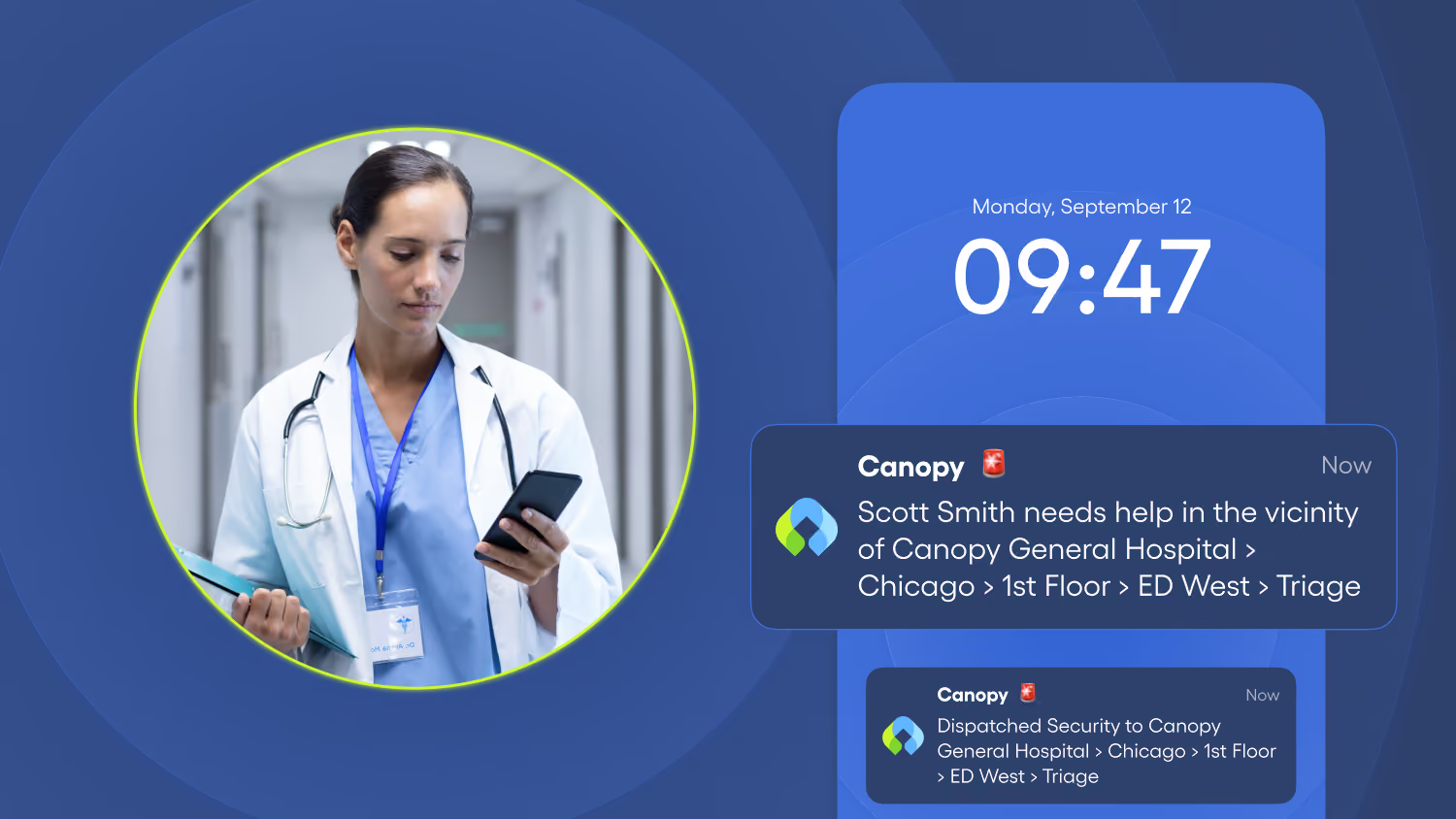
When a staff member double-presses their Canopy Button, even for something that doesn't yet feel like an emergency, the system simultaneously:
- Notifies security
- Sends secure SMS notifications to nearby colleagues who are currently on-site
The result? Trusted colleagues can arrive within 30–60 seconds, approximately 10 times faster than a traditional security response alone.
Think about what that looks like in practice. A nurse in a tense patient conversation double-presses their button during the simmer. A colleague two doors down gets a notification, walks over, and knocks. "Hey, just checking in. Need anything?" The patient's demeanor shifts. The moment passes. Security never needed to arrive.
That's not just a faster response. That's a prevented incident.
Why Proximity Matters: The De-escalation Effect
Crisis intervention research consistently shows that intervening at the earliest signs of agitation, rather than waiting for full escalation, is the most critical factor in achieving successful de-escalation. A cluster-randomized study published in Frontiers in Psychiatry found that structured de-escalation reduced aggressive incidents by 73% and severe aggressive events by 86% compared to standard care.
When multiple trusted colleagues arrive quickly, several things happen:
- Presence changes dynamics. The arrival of additional people often interrupts the escalation cycle. Agitated patients or visitors often respond differently when they see that a staff member is supported and not isolated.
- Burden is immediately shared. Instead of one person managing the situation alone, workload and stress are distributed across the team the moment they arrive.
- Specialized skills activate. Different staff members bring different strengths. An experienced charge nurse, a calm respiratory therapist, and a trusted CNA might each contribute unique de-escalation approaches that a single security officer cannot replicate.
- Documentation and witnessing improve. Multiple responders ensure better documentation and provide witness support for follow-up, reporting, or potential legal needs.
- Psychological reassurance is immediate. For the staff member who activated the alert, knowing that help arrived in seconds instead of minutes provides the kind of reassurance that changes how people feel about showing up to work.
It's Not Just for High-Risk Units
While emergency departments and psychiatric units see the highest workplace violence rates, Proximate Notifications benefits extend across every department:
- Medical-surgical units: Dementia patients, confused post-operative patients, and visitors under stress can all create challenging situations without warning.
- Imaging & lab: Techs working in semi-isolated spaces benefit enormously from knowing colleagues can arrive in seconds.
- Dietary & housekeeping: Support staff entering patient rooms alone gain real confidence knowing help is nearby.
- Overnight shifts: Smaller staffing levels make the peer support network even more critical and more impactful.
In each of these settings, the simmer can occur. And in every one of them, a nearby colleague responding in 30 seconds can change the outcome.
What Canopy Customers Are Saying
The impact isn't theoretical. Canopy customers are already experiencing it:
"The thing that was fabulous is not only does it alert security, but it alerts folks in their proximity who can respond to them... their coworkers were able to respond in real time and help them. And I think that alone made them feel safer because of proximity notifications."
— VP of Clinical Support Services, Pennsylvania-based health system
"The staff feels very thankful because they know that when they push that button, the best nurse, security, and their team members are all coming to support them."
— Chief Nursing Executive, Hawaii-based health system
Privacy-Respected, Community-Powered
One common concern about proximity-based notifications: "Will I be interrupted constantly? Will this track me when I'm off duty?"
The answer is no, and the design is intentional.
Proximate Notifications are built with intelligent, automatic boundaries:
- Staff only receive notifications when they're physically on-site
- Notifications only fire for incidents within a defined proximity zone
- When staff leave the campus, notifications automatically stop
- No tracking, no monitoring, and no manual configuration required
This isn't surveillance. It's solidarity.
The Cultural Shift: From Individual to Collective Safety
The most profound impact of Proximate Notifications isn't technological; it's cultural.
Healthcare has traditionally approached safety as an individual responsibility: carry your button, press it if needed, and manage until help arrives. Proximate Notifications shifts the paradigm to something more powerful: collective safety.
- "I've got your back" becomes an operational reality, not just a phrase
- Safety becomes a team sport, not a solo activity
- Isolation is replaced with interconnection
- Fear is countered with community
Staff consistently report that this cultural shift affects more than just crisis response. It strengthens team cohesion, improves morale, and creates a genuine sense of mutual support that carries through every shift, even the quiet ones.
Your First Line of Defense
Security personnel remain essential. They're trained, equipped, and necessary for serious incidents. But they can't be everywhere at once.
Colleagues, however, can be.
Proximate Notifications don't replace security. They complement security by creating a true first line of defense: the healthcare workers who are already nearby, already trusted, and already committed to each other's well-being.
In 30 seconds, everything can change.
The question isn't whether Proximate Notifications will help protect your team.
The question is: Why wait to implement it?
Not yet a Canopy customer? See how Proximate Notifications work in a live environment. Schedule a conversation with our team.
Already using Canopy? Proximate Notifications is available to you today at no additional cost. Reach out to your Customer Success Manager to activate i