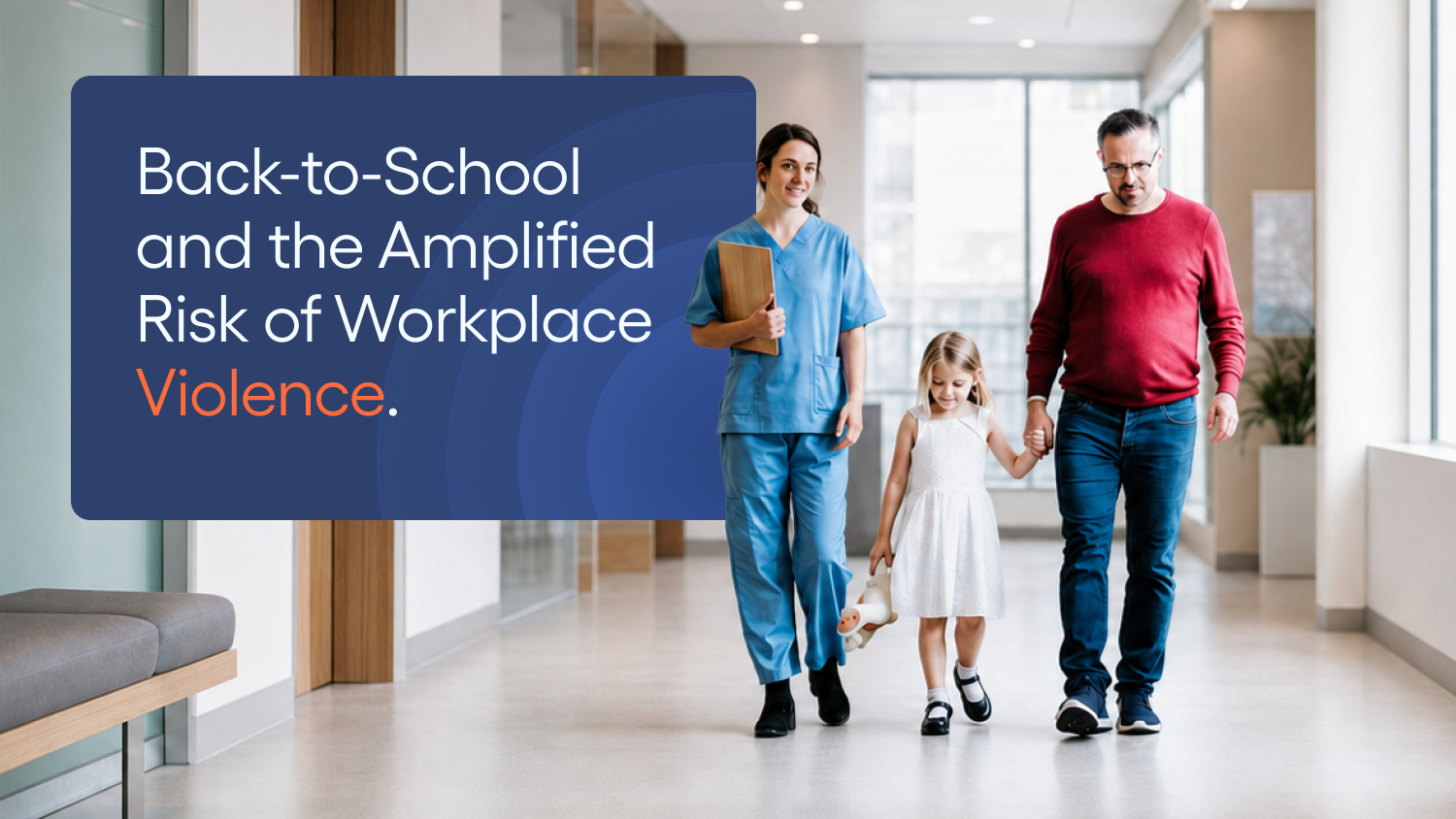
For most families, back-to-school season means new clothes, school supplies, and fresh starts. For healthcare organizations, it signals a season of pressures in an environment already carrying elevated workplace violence risk.
That risk is higher in pediatric settings than most clinical leaders realize. Pediatrics ranks third among the most dangerous units for hospital staff, behind psychiatric units and adult emergency departments, and 84% of all pediatric staff have experienced a violent situation at work. The risk isn’t from the patient population themselves, but from the people surrounding them. A 2024 study found that most violent events in pediatric settings are from guardians and visitors, and it makes sense. These are people who are frightened, exhausted, and emotionally overwhelmed by a child's illness.
While back-to-school season doesn't create that dynamic, it can intensify it. Higher patient volumes, more anxious families, and the accumulated stress of the school year converge in a setting that’s already one of the more demanding. That combination is worth preparing for.
Key Takeaways
- Pediatric hospitals already carry elevated workplace violence risk, and most of it comes from guardians and visitors, not patients. Back-to-school season intensifies that dynamic through higher volumes, more anxious families, and increased behavioral health presentations.
- Late summer brings a significant workforce transition, with newer staff who may be less prepared to recognize early warning signs of escalation, adding risk during an already demanding period.
- Back-to-school season is predictable, which means preparation can start before the pressure peaks. Refresher training, leadership rounding, and ensuring duress technology is functioning can all meaningfully reduce risk.
How Back-to-School Season Amplifies the Risk for Workplace Violence
Every August and September, kids face new stressors as they return to school, which often translate into increased strain on healthcare organizations. For example, school athletes get back to the court or the field, leading to an increase in pediatric injury presentations.
Respiratory illness follows a similar pattern. A study of asthma-related ED visits found that for children ages 5 to 11, school opening correlated with a 46% increase in emergency department asthma visits compared with the period before school started.
What can be even more frightening to parents is the mental health impact that a new school year can have on their kids. Visits to the ED for mental and behavioral health issues among children and adolescents aged 10 to 17 increase consistently every year in the fall compared to the summer months.
For clinical staff, this means more patients, more anxious families, and more situations where a single conversation can tip from tense to volatile. Parents navigating financial strain, logistical complexity, family conflict surrounding school transitions, and the emotional weight of a sick or struggling child are already under pressure before they arrive. Long wait times and uncertain diagnoses exacerbate this. None of this directly causes workplace violence, but it can increase the conditions under which staff are at risk from the very people they're trying to help.
New Nursing Staff Can Be at a Higher Risk
Late summer also aligns with a significant workforce transition. New graduate nurses begin their orientations. Resident physicians onboard. New security officers join their teams. Recently transferred staff adjust to unfamiliar units and patient populations.
New graduate nurses often find themselves unprepared for the transition from student to healthcare professional, encountering challenges including heavy workloads and workplace violence, contributing to what researchers describe as "reality shock" during their initial workplace experiences.
The stakes of that unpreparedness are significant. Unsurprisingly, workplace violence contributes to career dissatisfaction, regret, and increased turnover for newly graduated nurses who experienced it, with many questioning their career choice early in their practice as a result.
During a period when operational complexity is already elevated, having a higher proportion of staff who are still building those recognition and de-escalation skills creates additional risk. Providing newer staff with refresher education, experienced mentorship, and visible leadership presence can meaningfully reduce that risk during the transition period and make them feel safer and more supported.
Operational Readiness as a Staff Safety Leadership Priority
The back-to-school season is predictable, which creates an opportunity. Healthcare leaders can use this time to strengthen safety infrastructure before the pressure peaks rather than responding after it has already arrived.
Practical steps include:
- Reviewing workplace violence response plans and identifying any gaps before volumes rise.
- Providing seasonal refresher training on de-escalation that allows both newer and experienced staff to sharpen skills and reconnect with protocols.
- Ensuring wearable duress devices and emergency communication tools are functioning and readily available so staff have what they need when they need it.
- Increasing leadership rounding in high-risk clinical areas, which sends a visible signal that safety is a priority and gives frontline staff a direct channel to raise concerns.
- Monitoring trends in verbal aggression before they escalate to physical violence, which allows organizations to intervene earlier in the arc of an incident, when intervention is most effective and least costly.
- Reinforcing a culture of reporting, where staff understand that every incident matters, especially verbal threats. This ensures that leaders have the data they need to allocate resources and identify patterns.
Preparation Can Prevent Workplace Violence
Pediatric hospitals already operate in one of the more demanding safety environments in healthcare. Back-to-school season doesn't change that reality, but it does add a predictable layer of volume, stress, and workforce transition on top of a baseline that requires ongoing attention.
Organizations that anticipate these pressures are better positioned to protect both caregivers and patients. Rather than waiting for an incident to prompt action, leaders can use this seasonal transition as an opportunity to strengthen situational awareness, reinforce prevention strategies, and remind staff that their safety is a shared organizational priority.
The season is coming. The preparation can start now.
Still Navigating the Heat of Summer?
Read our tips for staffing for the complexities of summer.