Having a hospitalized child can often leave families feeling "terrified" and "helpless", and these emotions can certainly persist beyond the bedside. For nursing leaders in pediatric settings, this presents a distinct challenge: ensuring staff safety while maintaining the family-centered care central to children's healthcare.
A recent Canopy webinar with workplace violence experts from three leading children's hospitals highlighted that pediatric environments require a distinct approach to safety. Led by Canopy’s clinical strategy advisor, Dr. Jeanne Venella, and leaders from Children's Health, Children's Hospital Colorado, and Children's Hospital Los Angeles, the discussion addressed the complexity of these challenges and the innovative solutions being implemented nationwide.
Understanding the Scope
According to 2022 data from Press Ganey Pediatrics, pediatric care environments are the third-riskiest settings for healthcare professionals, after adult behavioral health units and emergency departments. Many clinical leaders recognize that the emotional intensity of pediatric care can quickly escalate workplace violence.
"Parents use terms such as terrified and helpless when their children are sick," Venella explained during the webinar. "Those are very powerful words." This emotional context, combined with post-COVID staffing pressures and rising behavioral health needs, has created, as one panelist described, a "perfect storm" for workplace safety concerns.
Breaking Through Underreporting
A major barrier to addressing workplace violence in children's hospitals is not the incidents themselves, but the reluctance to report them.
Melissa Jones, Director of Workplace Violence Prevention at Children's Health, identified this challenge during her first 130 days in the role. "Oftentimes our staff is experiencing workplace violence, but they don't report it because it's a child," Jones explained. "They're just a child, they didn't mean it, and they're not really thinking about what the definition of workplace violence is."
This "pediatric pass" mentality leads to significant gaps in data collection. Without accurate reporting, leaders cannot allocate resources effectively or identify patterns to prevent future incidents. As Jones emphasized: "I can't fix what I don't know."
Addressing this issue requires a cultural shift that separates reporting from blame. "It's not a punitive measure to report workplace violence," Jones stressed. "My job is to examine the data, and every time you report where workplace violence is happening, it gives me some structure."
Building Multidisciplinary Response Teams
All three panelists agreed that effective workplace violence prevention requires multidisciplinary collaboration. At Children's Hospital Los Angeles, Meghan Drastal, Behavioral Health Manager of Patient Care Services, described a comprehensive rounding model that integrates psychology, psychiatry, child life, social work, and security.
"I love to get feedback from the frontline staff," Drastal explained. "They're the ones that are experiencing what's going on. They know the challenges firsthand, they know what's working, they know what's not working."
This feedback loop has led to innovations such as the Behavioral Health Code Cart, a mobile unit equipped with safety PPE, bite-resistant gloves, face shields, ligature-removal devices, and pediatric-sized restraints. The cart also features a lockbox for patient belongings. This new cart quickly helped to address process gaps identified during staff rounding.
At Children's Hospital Colorado, Suzy Jaeger, Chief Patient Experience and Access Officer, emphasized the importance of listening before implementing solutions. The hospital adopted a layered approach, including renewed security partnerships, visitor management programs, weapons detection systems, and personal duress devices. They also invested in resiliency and wellness programs, recognizing that physical safety measures alone do not address the emotional demands of pediatric care.
Balancing Technology and Relationships
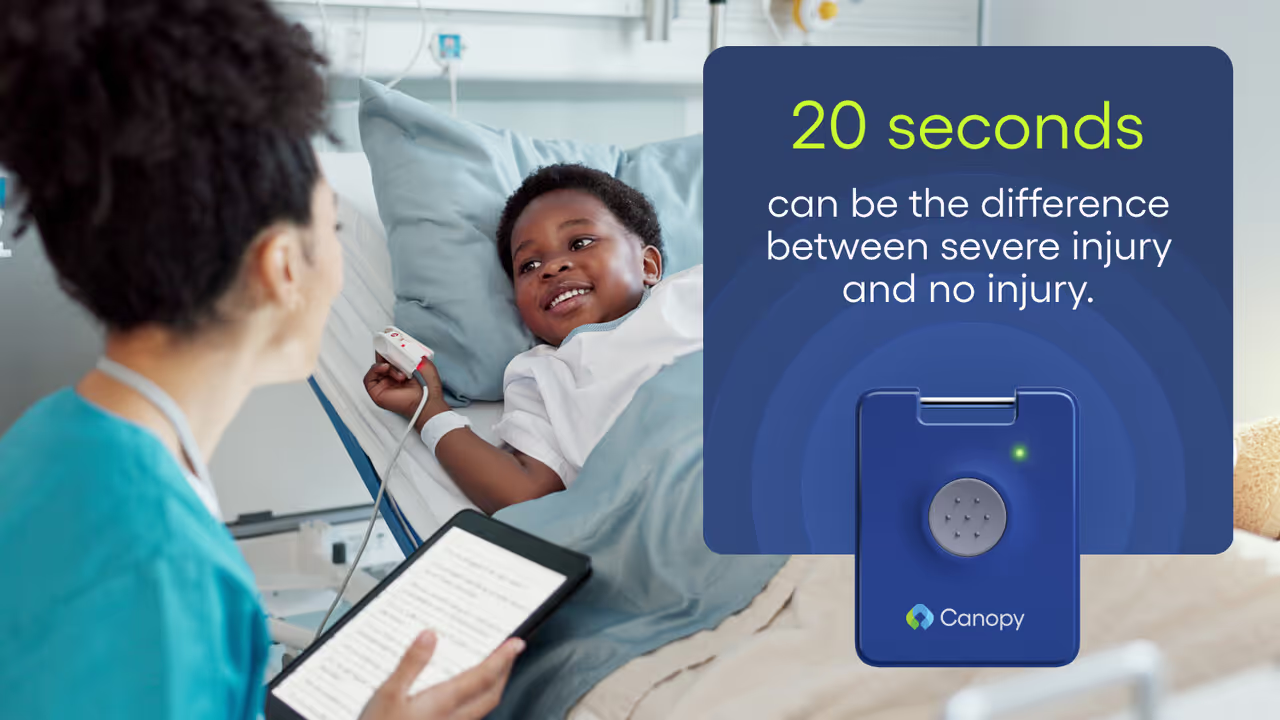
All three panelists have implemented Canopy Protect's personal duress badges, either currently or in previous organizations. They emphasized that this technology complements, but does not replace, interpersonal connection and intervention.
Jones reported that, in her previous organization, personal duress badges reduced security response times from 55 seconds to 32 seconds. "Twenty seconds responding to a violent event can make the difference between severe injury and no injury," she noted.
At CHLA, over 6,000 staff members use the badges, with about 30 intentional activations per month, and security response times are usually under 30 seconds. Drastal noted that the badges are used alongside other interventions, such as a behavioral escalation response team and preemptive safety huddles before high-risk patient admissions.
Jaeger described Colorado's use of a de-escalation navigator integrated into their Epic electronic health record system. Over three years, the tool documented about 3,500 incidents, with 65% labeled low acuity, indicating successful early intervention. The hospital also saw a nearly 20% reduction in patient complaints and grievances, showing that safety interventions can improve patient experience.
Addressing Compassion Fatigue
The psychological strain of pediatric care was a recurring theme. Replacing experienced pediatric nurses is costly, both financially and in terms of lost institutional knowledge. "Staff burnout in children's hospitals is very costly," Venella noted. "It takes a long time to go from novice to expert and become comfortable in this complex environment."
Colorado Children's Hospital responded with creative resilience initiatives, including extending its creative arts therapy program to staff. They also implemented moral distress rounds, CISM debriefings, resiliency rounds, and visits from their medical therapy dog.
Jaeger emphasized, "There isn't a one-size-fits-all type of approach to these programs. It's important that you spend time listening to your team as well as trying to understand where they're coming from and meet them in the middle."
Creating a Strategic Framework
Jones advised nursing administrators to begin with a strategic plan that addresses both short-term needs and long-term goals. "You can't boil the ocean overnight, although some days I try," she acknowledged.
Her framework includes four timeframes:
- 6 months: Early quick wins that can make an immediate impact, such as removing staff's last names from ID badges and holding small group listening sessions with direct care staff
- 1 year: Foundational program elements
- 3 years: Major technology implementations and culture change initiatives
- 5 years: Sustained program evolution and optimization
Jones emphasized that workplace violence committees should be "frontline-heavy, not top-heavy." Committees should include representatives from all departments, such as environmental services, food services, laboratory, nursing, and security, to ensure diverse perspectives in decision-making.
Metrics That Matter
Beyond standard incident counts, the panelists track several indicators of program success:
- De-escalation success rates: The percentage of incidents resolved without physical intervention, an increase in reporting of verbal abuse or assault
- Severity of injury: Tracking whether interventions are successfully reducing harm
- Response times: How quickly security and support teams reach staff who activate duress systems
- Low-acuity incident rates: Indicating early intervention success
- Staff satisfaction and retention: The ultimate measure of whether safety programs are building environments where nurses want to continue practicing
Drastal reported a 700% increase in workplace violence reports at CHLA since 2022. While this number may seem high, it indicates progress in overcoming underreporting and fostering a culture where staff feel comfortable documenting incidents.
Building Safer Care Environments
As the webinar concluded, Venella stressed the core relationship between staff safety and the quality of patient care. "When pediatric care teams feel safer, they can not only stay present to the child, but they can deliver the best care that is possible."
For clinical leaders working to build comprehensive workplace violence programs, several principles emerged from the discussion:
- Foster psychological safety around reporting. Staff should understand that documenting incidents is not punitive but provides essential data for resource allocation and program improvement.
- Build multidisciplinary partnerships. Effective programs require collaboration between nursing, security, social work, child life, psychology, pastoral care, and facilities management.
- Layer interventions. No single solution addresses workplace violence. Successful programs combine technology, training, environmental modifications, and emotional support.
- Listen to frontline staff. Those experiencing workplace violence firsthand often have the best insights into practical solutions.
- Address compassion fatigue proactively. Staff retention requires attending to both physical safety and emotional well-being.
- Measure what matters. Track metrics that demonstrate program effectiveness and guide continuous improvement.
The mission of children's hospitals to provide family-centered care during challenging times requires robust safety programs. When nursing teams feel supported and protected, they are better equipped to deliver the compassionate, high-quality care that defines pediatric healthcare.
As Jones reminded participants: "We're never going to stop workplace violence because we can't change other people. But we can put tools and resources in place to reduce the severity of injuries to our staff. We want you to focus on providing the best care to your patients, and let us provide the best care to you."
This blog post recaps a webinar hosted by Canopy featuring workplace violence experts from Children's Health, Children's Hospital Colorado, and Children's Hospital Los Angeles. For more information about building comprehensive workplace violence programs in pediatric settings, reach out to us at canopyworks.com.